
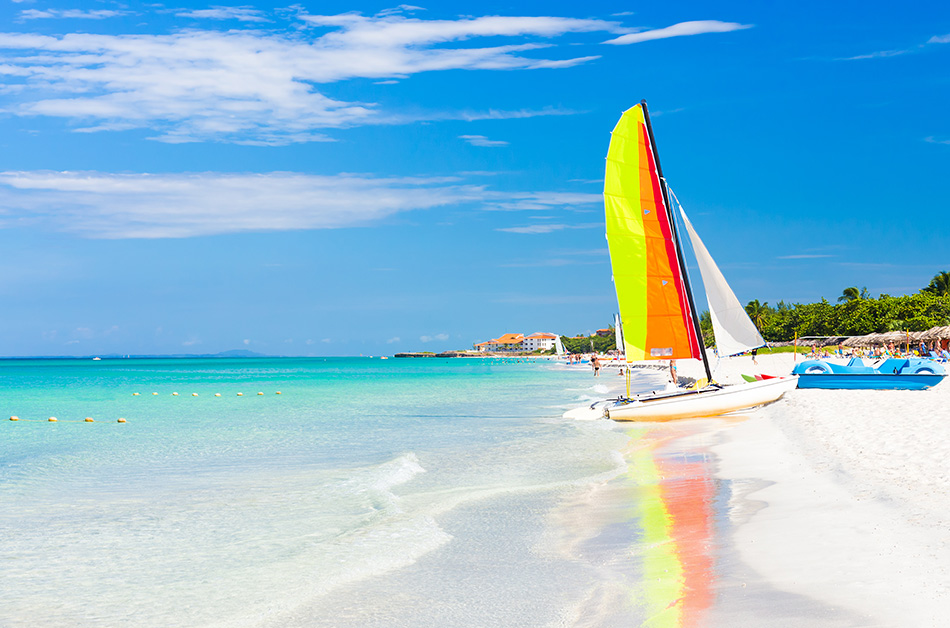
Varadero Beach
Is a beach resort in the Guayaquil canton, located in the Posorja parish. The beach is on the Playas-Posorja road. Officially it belongs to the Data de Posorja precinct.
It has nothing to do with the Cuban city and its a good start for these 3 paradises in Guayaquil. It is a coast of 2.5 kilometers with an excellent climate throughout the year. You can play beach soccer and it is very safe for children because small natural pools are formed when the tide goes out.
Varadero beach in Guayaquil is a great place to visit thanks to Guayaquil’s tourist site rescue project, which converted 24 informal shacks that sold food into a spectacular seaside food court.
The location of the current Varadero beach consisted until the first decade of the 21st century in a commune of 24 huts with poor tourist service. Since 2010 it had an important process of urban regeneration promoted by the Municipality of Guayaquil.
The beach has a length of 2.5 kilometers of beach extension, and has food courts and restrooms.
Santay Island

Santay Island is an Ecuadorian island. It is located in the Guayas River and belongs to the Guayaquil canton. The island covers an area of 2,179 hectares. There are 56 families living in 46 houses, 36 of which are located at the entrance of the area. Since October 10, 2000, the island is a Ramsar site, the sixth wetland declared in Ecuador with a total area of 4,705 hectares. Since February 20, 2010, Santay Island is also a Protected Area and is part of the National System of Protected Areas as a National Recreation Area.
When it comes to Guayaquil’s tourist attractions, it is almost a must to visit Santay Island, connected to the city by a pedestrian bridge of more than 800 meters justly built for the enjoyment of tourists and locals.
Santay Island is rich in flora and fauna and mangroves are its main feature. The bridge can be crossed on foot, by bicycle or with a vehicle (parking is available on the island). It can also be accessed by river by crossing the river in small boats that are taken at the Yatch Club of Guayaquil.
This place is a wetland, an ecosystem characterized by being hybrid, i.e., not entirely aquatic or terrestrial. Eighty-seven percent of the planet’s wetlands have disappeared, which is why they are important protected areas.
Diego Noboa stairs

There are 444 steps (yes, 444!) but don’t worry, you don’t have to climb them all at once. On the contrary, it’s a walk to take it easy and stop at the art galleries, chapel, bars, cafes, restaurants and craft stores along the way. Surely one of the 3 paradises in Guayaquil for those people who like to walk and shop.
This is one of the most beautiful and special places to walk around the city of Guayaquil. You will appreciate the local color first hand and before you know it you will be at the top of Cerro Santa Ana, enjoying a breathtaking view of the city.
Cerro Santa Ana, where the city was settled in the 16th century, between 1540 and 1550, is one of the city’s most important tourist attractions. On a 444-step walk up the “Diego Noboa” stairway, you will find bars, restaurants, cafes, art galleries, Internet cafes and handicraft stores. In addition, the place is equipped with small squares and green areas for recreation and relaxation.
The hill, 60 meters high, is one of the most important viewpoints of Guayaquil, because from its top there is a spectacular view that allows a visual tour with a 360 degree turn, where you can see to the north: the intersection of the Babahoyo and Daule rivers that form the Guayas; to the south: the commercial center of the city; to the east, the Santay Island and Durán; and to the west, the Cerro del Carmen and the rest of the city. In the viewpoint of the hill there are special binoculars for tourist use.


