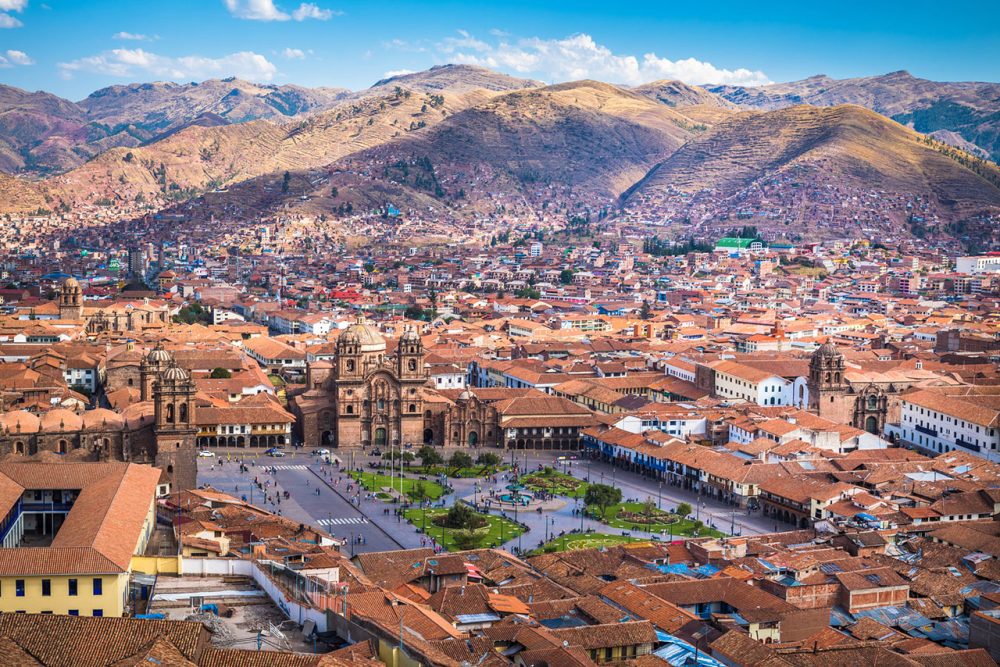
Hidden paradises in Cusco

Cusco is a city of Peru recognized worldwide for housing one of the most impressive architectural wonders in the world, the Ruins of Machu Picchu, this paradise built thousands of years ago by the Inca civilization still stands tall and is available for those who wish to know its walls. However, today we will be talking about other hidden paradises in Cusco.

Here we will leave you a top 10 of hidden paradises in Cusco:

1. The Red Valley of Pitumarca

The Vilcanota mountain range, south of Cusco, is the scene of incredible natural attractions. The best known of all is the Mountain of the 7 Colors (5,200 m.a.s.l.). However, very few visitors know about the so-called ‘Red Valley of Pitumarca’, a natural landscape located nearby.

The slopes and summits of this site are stained red due to a mineralization process millions of years ago. Although the ‘Red Valley’ is a new attraction, it is estimated that it already receives 500 visitors a day.

2. The Mountain of the 7 Colors of Palcoyo

The Mountain of the 7 Colors of Palccoyo (4,900 m.a.s.l.) is a summit dyed in various colors in a very similar way to Vinicunca. It is located a short distance from the snowy Ausangate. It is one of the new attractions of the Vilcanota mountain range.

In Palcoyo, in addition, you can see a stone forest formed naturally. Llamas, alpacas, vizcachas, condors and other animals abound there. Despite its beauty, there are still not many tourists who dare to visit it.

3. Three Golden Crosses: the most beautiful sunrise in the world

The most beautiful sunrise in the world can be seen from the Tres Cruces de Oro viewpoint, in Paucartambo (Cusco). The place is called ‘Akhanacu’, also known as the ‘Balcony of the East’ because in the distance you can see the Manu, in the jungle of Peru.

This natural spectacle occurs every morning, starting at 4.30am. The sky is dyed red, orange and its shades. Every winter solstices (end of June), in Tres Cruces de Oro the so-called ‘White Lightning’ happens, an optical illusion that simulates three suns in the distance.

4. Putucusi Mountain: seeing Machu Picchu for free is possible

Putucusi Mountain (2,560 m.a.s.l.) means ‘Happy Mountain’ in Quechua. Putucusi, belongs to the mountain chain that surrounds Machu Picchu. There is no known Inca construction but from its top it is possible to appreciate the Wonder of the World in the distance.

Climbing its slopes is an extreme adventure due to the difficult access of its paths. The most difficult section is a climb up a wooden staircase several meters high. Recently it was destroyed so access is temporarily not possible.

5. Huasao Wetland: Groot and the Lord of the Rings in Cusco

A few kilometers from Cusco there is a theme park where the characters from ‘Guardians of the Galaxy’ and ‘The Lord of the Rings’ were designed in wood. Huasao wetlands is a natural environment where one can be away from the city and enjoy nature.

This attraction is located in the district of Oropesa. A short distance from there, there is an ideal Jurassic park to visit with the little ones. You can also enjoy the famous ‘Pan chuta’ and ‘Suckling pig in the oven’.

6. Lares thermo-medicinal baths

Lares (3,150 m.a.s.l.) is famous for being a mandatory route of the ‘Lares Trek’, which leads to Machu Picchu after 4 days of walking. However, this district is also popular for hosting the thermal-medicinal baths of Lares, a relaxation space in the mountains.

The thermo-medicinal baths of Lares have up to 4 pools with natural hot waters that vary from 36ºC. up to 44ºC. Its waters have relief and healing properties in diseases such as osteoporosis, arthritis and muscle problems.

7. Humantay Lagoon

The Humantay Lagoon (5,473 meters above sea level) is, without a doubt, one of the most incredible landscapes in Cusco. This natural tourist attraction is located at the foot of the mountain of the same name, on the way to the snowy Salkantay. It is a highly visited tourist attraction.

Getting there is an adventure. You walk through high Andean landscapes where you can see llamas, alpacas, vizcachas among other animals. The lagoon is surrounded by snowy peaks.

8. Cocalmayo hot springs

Visitors who arrive at Machu Picchu through the alternate route through Hydroelectric have the option of relaxing in the thermal baths of Cocalmayo. This natural attraction is located in the town of Santa Teresa, approximately 20 kilometers from Machu Picchu.

The thermal waters of Cocalmayo have up to 3 pools with temperatures from 38ºC. up to 44ºC. Its waters are clear and have healing and relaxing properties. Many tourists arrive there on their way to Machu Picchu in order to relax.

9. Piquillacta: the pre-Inca city in Cusco

Piquillacta (3,250 m.a.s.l.) is an archaeological complex built by the Wari culture in approximately the year 500 of our era. The 50-hectare enclosure contains up to 700 buildings in addition to other constructions.

It is estimated that 10 thousand people lived there (a maximum of one thousand lived in Machu Picchu). Despite its majesty and historical importance, it is still not very popular with tourists. Piquillacta is the most important pre-Inca discovery in Cusco.

10. The Inca Bridge of Q’eswachaka

3 hours from the city of Cusco, in the town of Qhehue, survives the last Inca bridge called Q’eswachaka and declared Intangible Cultural Heritage by Unesco. This bridge made of ichu (Andean grass) is approximately 500 years old.

Every second week of June, the inhabitants of the surrounding communities rebuild the bridge just as their Inca ancestors did hundreds of years ago. Thus, after a 4-day ceremony, the old bridge is replaced by a new one.

Related Posts

Share