
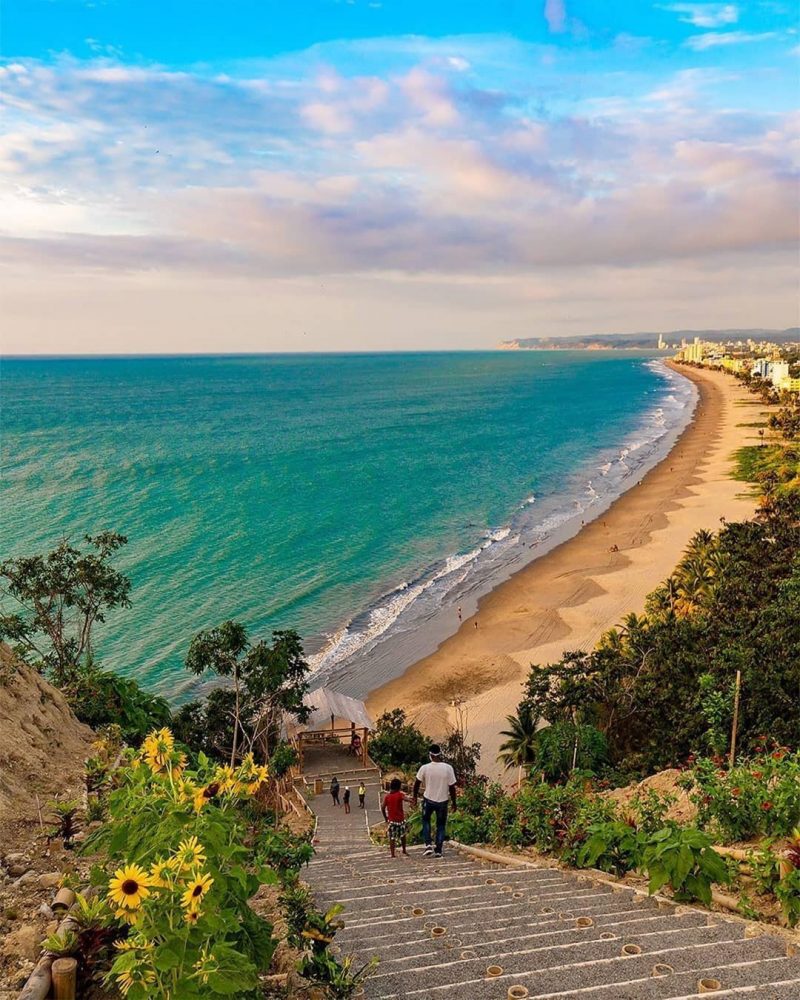
Perfect magical destination: Esmeraldas. Discover in this article our top of hidden paradises of Ecuador located in Esmeraldas.
On the northwestern edge of Ecuador, cultures with roots from all over the world are coupled in the middle of the jungle, the river and the sea. This adventurous nexus of peoples and ecosystems is the essence of the Esmeraldas demarcation and its main attraction for the visitor. European feet first touched Ecuadorian soil here, when the Hispanics landed on the Pacific coast in 1526. The Conquistadors were surprised to find Indians, guarded by emeralds, waiting for them on the shore. Convinced that the region was abundant in the shining gems, they named it Esmeraldas.
Where to go in Esmeraldas?
The Esmeraldas of today hosts few emeralds, they are at the elevation of its other name, the Green Province. Esmeraldas, the northernmost of the coastal departments, is equally the most exuberant, plagued by flooded embayments, mangroves and rainforests. Its ancient and wild inland areas, accessible only by canoe, make Esmeraldas the ideal setting for a river safari.
Emeraldas Coast, Ecuador

If you don’t feel competent to impersonate an Indiana Jones reenactment and choose to vegetate rather than trespass, Esmeraldas also boasts some of the most impressive beaches on the shore, most of them enveloped by small settlements that last in the harvest of the sea. Though the catch of the day is increasingly destined for a tourist dish at one of the province’s oceanfront resorts, which range from party towns that draw swarms of hikers to quiet elite retreats.
Northern jungles in Esmeraldas, Ecuador

In the north of Esmeraldas, roads are transfigured into gravel and promptly into dust before they subsequently peter out, their progress halted by a labyrinth of flora and water. Entry to this fabulous wilderness requires a boat and firm sand, the kind exhibited by the area’s first non-indigenous settlers, the African slaves who made daring escapes through the dense jungle of the Colombian plantations, and later created renegade militias to battle the Spanish. The descendants of those rebellious slaves, along with the Chachi Hindus, cling tenaciously to the few human outposts in the comarca, their lives oriented to the flow of nature.
Because of its inaccessibility, the confusing natural beauty of the northern coastal forest has eluded most visitors to Ecuador. Here the bohemian gets to enjoy the quiet pleasure of wandering through the mangrove-like net, in such complete ellipsis that you can almost hear the shrimp rustling beneath your canoe. Nature fanatics will appreciate the rich biodiversity of the region, containing diverse species of endemic birds, which can be explored in the Cotocachi and Cayapas Ecological Reserve and the Bilsa Biological Reserve, or through Savage Tours, a travel agency dedicated to conservation, which is mastered in Exploraciones de la floresta de Esmeraldas (Esmeraldas Forest Explorations).
Green River

As you follow the riverside road north from the town of Esmeraldas and cross the Esmeraldas River, cattle farms and farmland will soon be supplanted by thick forests and a deserted riverbank. Small fishing villages dot the road, mostly with attractive riverbanks and few tourists. The two largest towns are Rio Verde and Rocafuerte. At the end of the road, progress ceases and embarks on the Mataje and Cayapas Ecological Reserve. The reserve hosts 50,000 hectares of intact mangrove forests, uninhabited riverbanks and exuberant fauna, and provides excellent birdwatching opportunities.
It receives few tourists, but hosts several foreign assistance and exploration projects that captivate researchers from around the world. Japanese technical management for global lake reforestation has established that the Selva Majagual mangroves within the reserve are the tallest in the world, some over 60 meters. Nearby Olmedo also has original mangroves growing right on the beach, as well as divine coconut forests.
The reserve runs north to the Colombian border from the riverside towns of La Tola and Limones, both of which have basic budget accommodations. Limones has the beach forests of Canchimalero and Santa Rosa Conduit. They promise excellent opportunities to observe wildlife, including huge colonies of birds and rare mammals such as the miniature tree bum.
San Lorenzo in Esmeraldas, Ecuador

The largest town in Esmeraldas, it offers many excellent eateries and the best lodges in the area, but remember that accommodations are still fairly basic. For a really succulent riverside meal, stop by Conchita’s restaurant. Ask the owner to serve you a shrimp dish or seco de pollo, a kind of chicken stew.


